Discover comprehensive information for all aspects of sexual health and find resources and guidance to empower your sexual well-being.
The International Society for the Study of Women’s Sexual Health describes Hypoactive sexual desire disorder…

Milk is the most common food consumed globally. It is also a major ingredient in the preparation of various dairy products like butter, cheese, ghee, whey, ice cream, yogurt, etc.
Lactose is a type of sugar. It is the main carbohydrate found in milk.
In the body, lactose is broken down into glucose and galactose by the enzyme lactase which is present in our intestines. This process helps in the digestion and absorption of lactose.
Lactose-free milk is produced by food manufacturers by adding lactase enzyme directly to milk.
It can be used just like regular milk.
The lactase enzymes most commonly used in the industry are β-galactosidases.
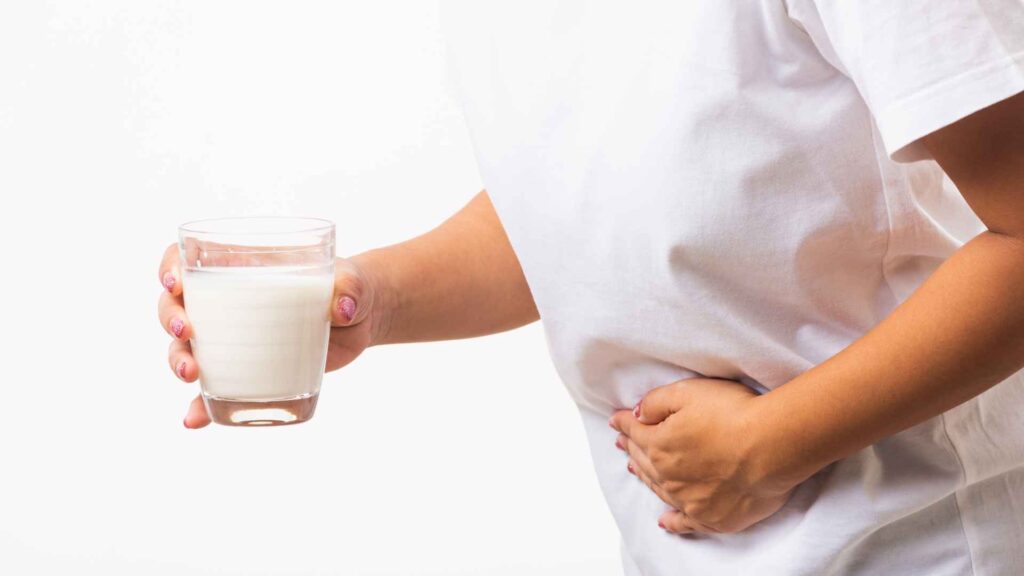
A large percent of the world’s population suffers from allergies to milk solids and lactose intolerance and cannot consume milk and milk products.
Lactose intolerance specifically means the inability of the body to break down lactose into its simplest form for digestion and absorption.
People who are lactose intolerant experience abdominal pain, diarrhea, bloating, flatulence, and other gastrointestinal symptoms following consumption of milk or milk products.
For lactose intolerant people, their only treatment is their lactose-free products.
Related: Prebiotic Vs Probiotic
Lactose-free milk is made by adding lactase to regular milk, breaking down lactose into simple sugars that are easier to digest. It can be a good alternative for people with lactose intolerance.
References

Dr. Nishtha Wadhwa is a medical doctor (MBBS, MD) who explains why we feel what we feel, in mind and body, without judgement. She is trauma-informed and is currently pursuing a Master’s in Clinical Psychology. Her own struggles with physical and mental health shaped how she teaches: in plain language, with practical steps, and with a focus on how closely mind and body are connected. Her work also draws on her training in nutrition. Watch her videos on YouTube at @healthintoto.